The Island of Gems
Ratnapura, Sri Lanka — the oldest working gem fields on earth.
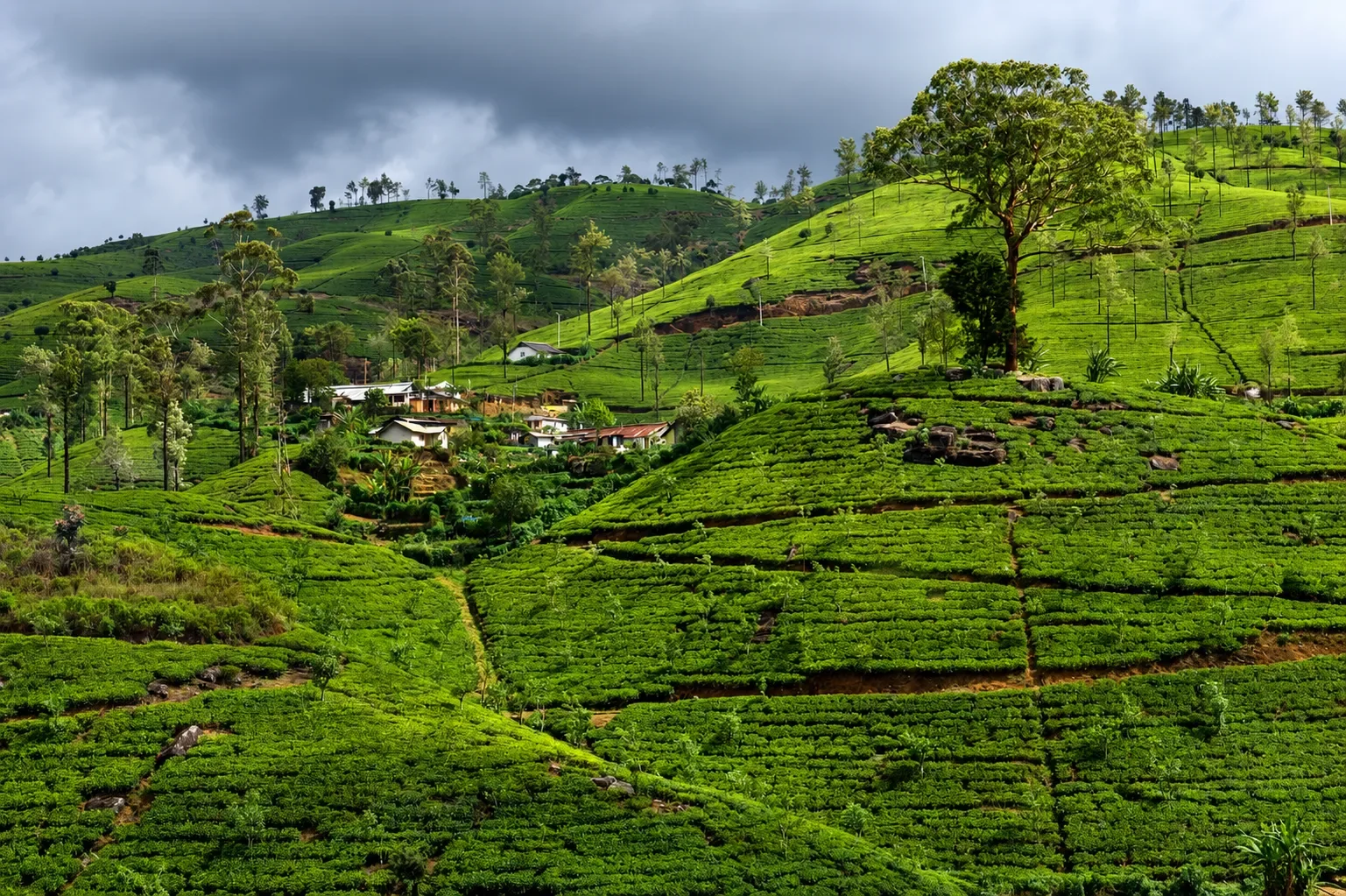
Twenty centuries of sapphire
Sapphires have left this island for more than two thousand years — very likely the first blue-sapphire source humanity ever knew. Greek and Roman writers recorded its gems; the old Sanskrit texts called it Ratna-Dweepa, the island of gems.
Marco Polo, calling in 1292, judged its sapphires the finest in the world. Seven centuries on, a Ceylon stone sits in the Smithsonian, another in the American Museum of Natural History, and a third on the hand of the Princess of Wales.
The gravel beneath the paddy
The gem fields lie in the island's south — around Ratnapura, literally the City of Gems, and east to Elahera and Kataragama. For a few million years, monsoon rivers have carried corundum down from the central highlands and buried it under paddy, garden and grove.
Pits open where the gem gravel — the illam — runs shallow. White quartz on the spoil heap is the old sign that the seam is near.
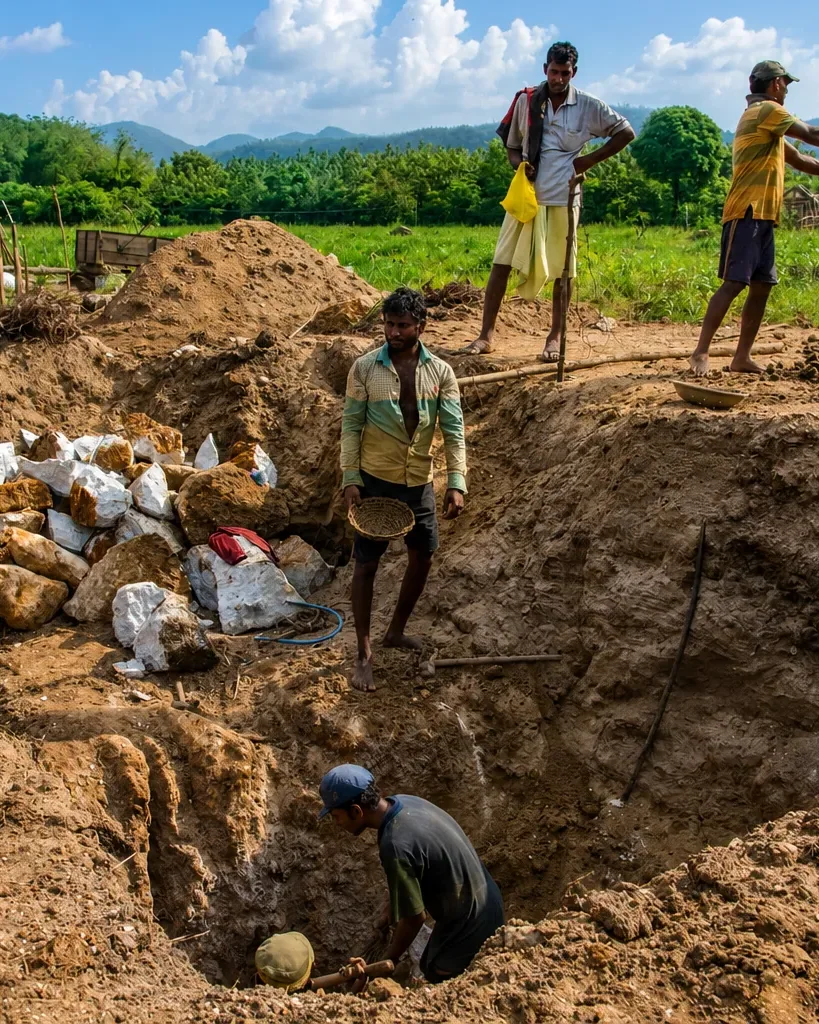
Sunk by hand, timbered by eye
A Ceylon pit is a narrow shaft shored with cut timber and fern, dropped through clay and sand to the illam below. Sri Lankan law keeps it this way: machinery is restricted, licences are small, and the land is restored when the pit is done.
The methods would be familiar to a miner of five centuries past — which is precisely why the fields have lasted twenty.

A basket, water, and patience
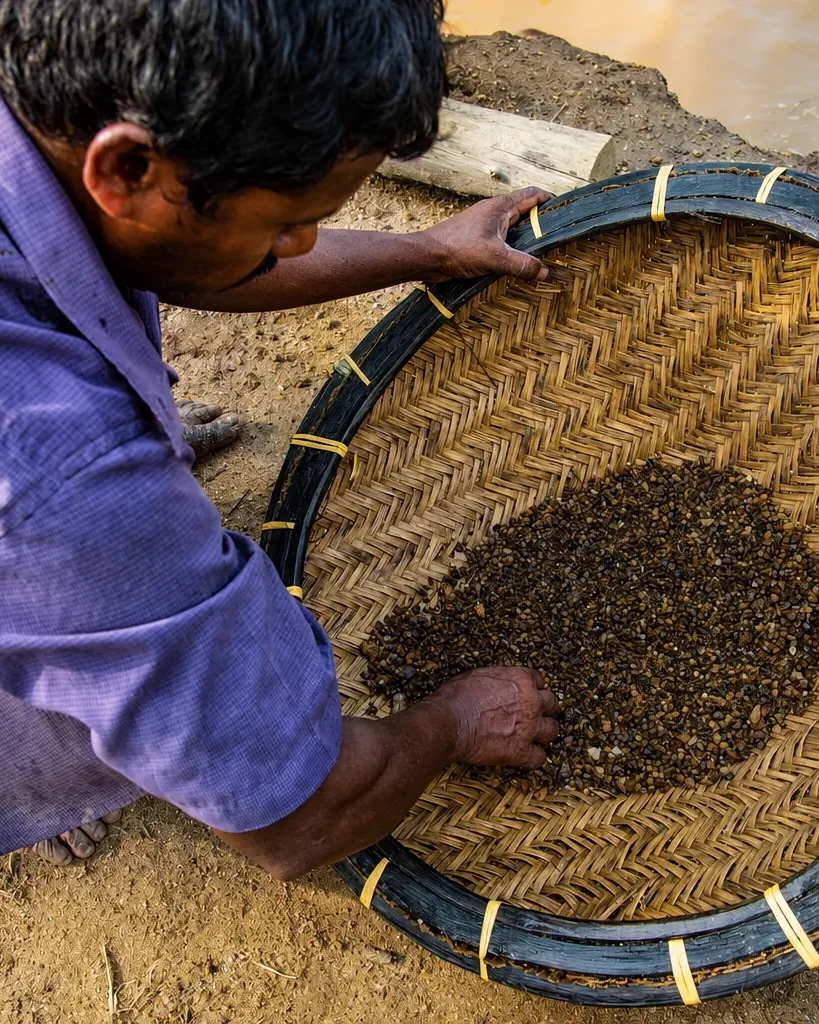
The illam is washed in a woven basket, turned in slow circles until the sand lifts away and the heavy stones settle at the centre. Then the eye does what no machine can — picks the one pebble with light inside it.
Most baskets hold nothing. That arithmetic is the rarity: a clean, unheated cornflower blue is one stone among tens of thousands of pebbles washed.
Blue first — never blue only
The signature of the Sri Lankan sapphire is the cornflower blue: bright, open, alive even in candlelight. But Ceylon works in a wider palette — yellows, pinks and violets, and star sapphires whose silk aligns so precisely that a well-cut cabochon carries a six-rayed star across its dome.
Above them all sits the padparadscha — the pink-orange of a lotus at first light, named in Sinhala, found in fine quality almost nowhere else on earth. Collectors do not treat it as a variety so much as a pilgrimage.
One gravel, many stones
The same illam gives up spinels, zircons, tourmalines, cat's-eye chrysoberyl and — rarest of all — alexandrite, which turns from green to red as daylight gives way to flame.
The island cuts as well as it mines. Ceylon's lapidaries and its famous burners — the heat-treaters of corundum — are among the most skilled hands in the trade. That skill is exactly why disclosure matters: which stones were improved, and which the earth finished by itself.
An inheritance, in writing
For the Maison, this island is more than a source. The founder's ancestors are of Ceylon — the gravels described on this page are ancestral ground.
So a Ceylon sapphire the Maison offers carries its origin on paper — laboratory-certified, treatment stated plainly, the unheated stone named as such.
Twenty centuries supply the name. The certificate supplies the proof. A commission deserves both.
The oldest name in sapphires, held to the present standard.
Begin the Conversation