The Ruby
The red corundum. An old valley sets the reference — a new coast answers it.
Red, by chromium
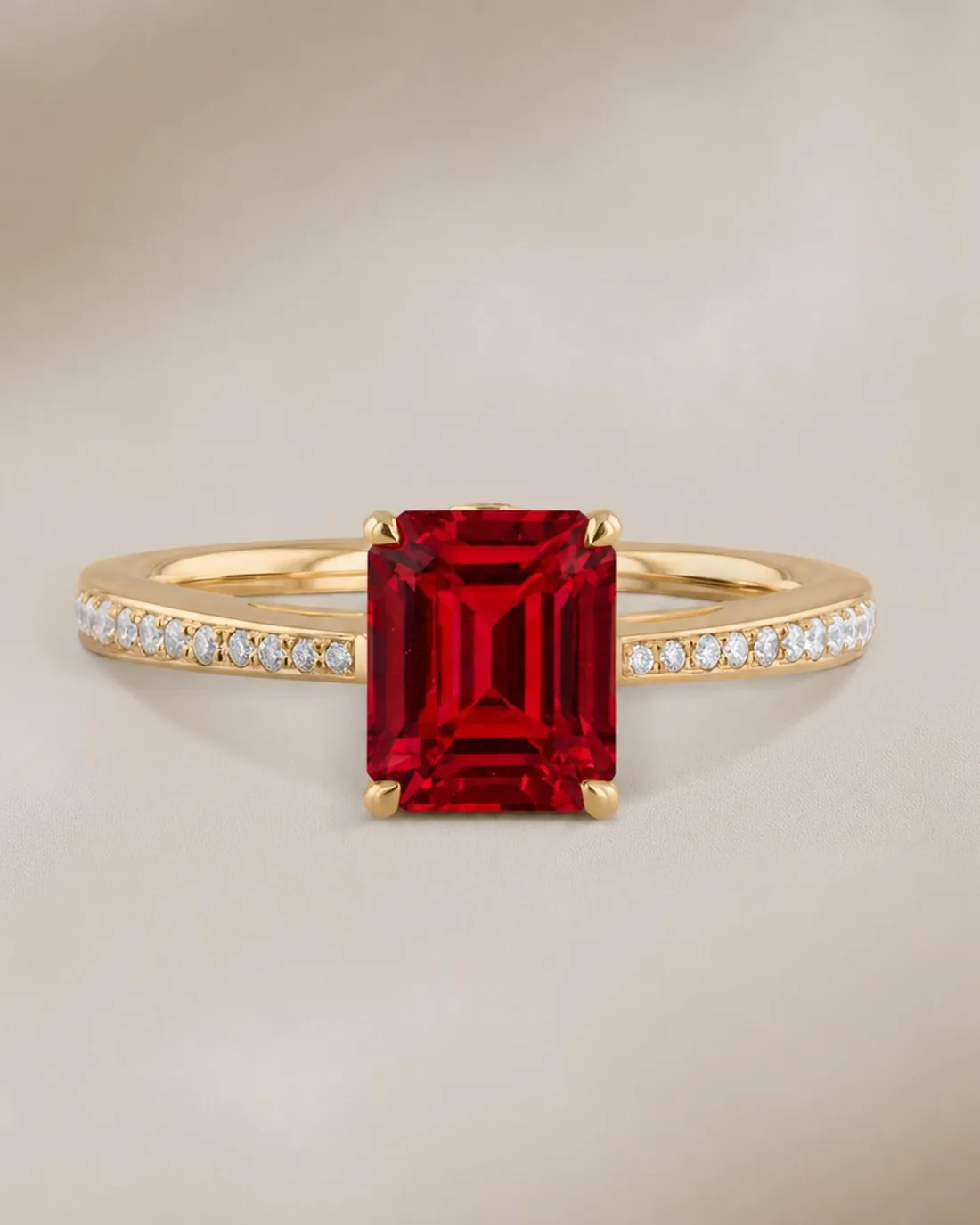
The same mineral as sapphire — corundum — but chromium turns it red, and the red earns its own name. Nine on the Mohs scale: an heirloom that works for a living.
- The glow — chromium fluoresces in daylight. A fine ruby appears lit from within; that light is chemistry, not marketing.
- Heat — most rubies are heated, and we say so. The unheated stone is the rarity of the trade.
Burma — the Mogok valley
Rubies have come out of Mogok for as long as records exist — a single valley that supplied courts and treasuries for centuries. The Burma ruby still sets the reference today.
Pigeon's blood is a colour, not a slogan: pure red, faintly blue, glowing under daylight. The term belongs to Mogok's marble-born stones, and every laboratory grades against it.
The Burma OriginMozambique — the new power
Found at Montepuez in 2009 — the most significant ruby discovery in living memory. Within a decade, most of the world's fine rubies were coming from one corner of East Africa.
Born in different rock than Burma's marble, the stones carry a deeper iron signature — quieter in fluorescence, formidable in colour. The finest now stand beside Mogok stones at auction.
A young origin, not yet an old name — which is exactly where the discerning eye finds value.
The Mozambique OriginA stone for the hand
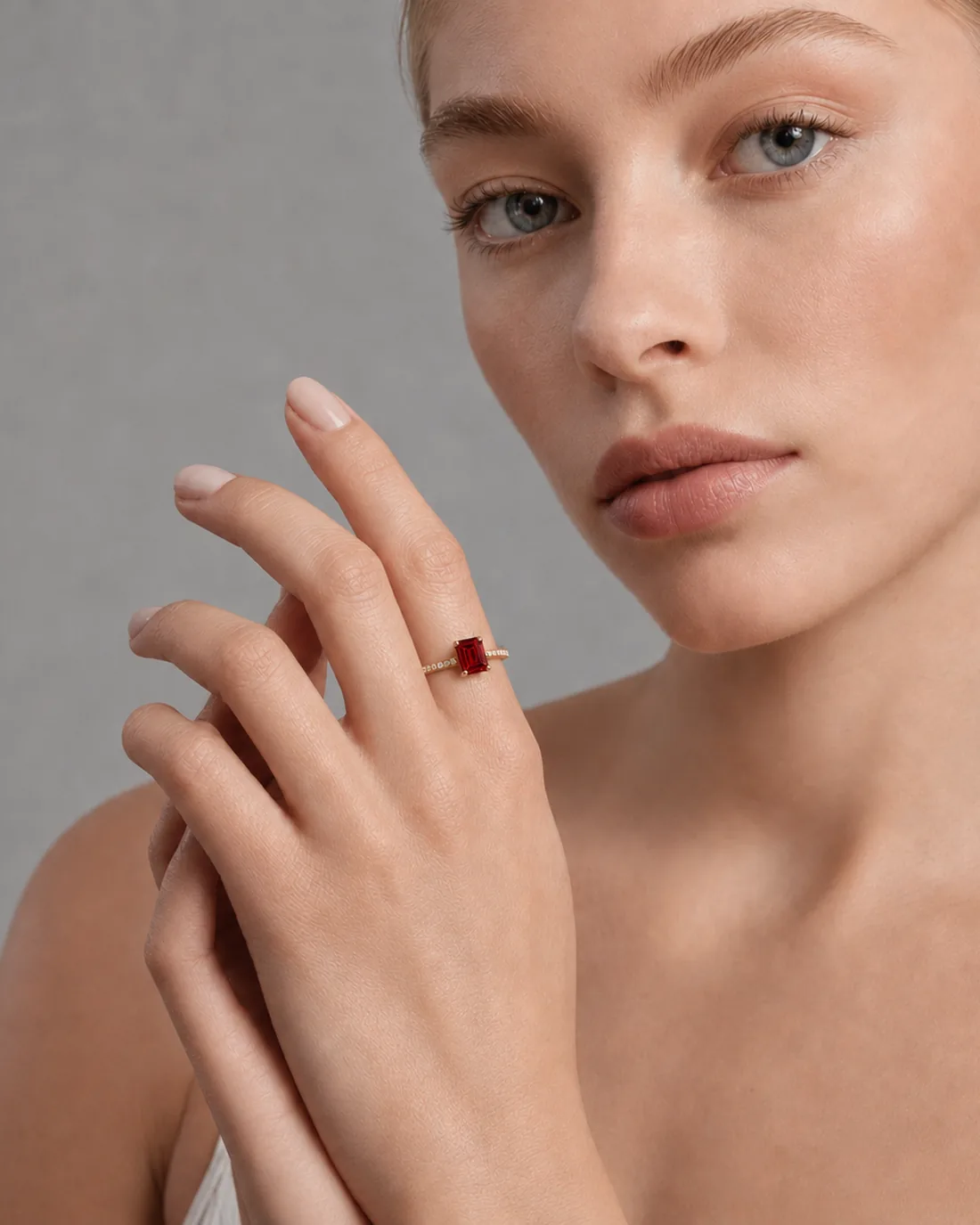
Hardness is not an abstraction — it is what lets a ring be worn daily for a lifetime and passed on unworn-down.
The Maison sets rubies as it sets diamonds: to tolerance, under the loupe, in settings engineered for the decades ahead of them.
Origin, in writing
Every ruby the Maison offers is sourced at origin, vetted for provenance, and accompanied by its treatment status — stated plainly, in writing.
Asked, answered
What is a pigeon’s blood ruby?
The trade’s oldest colour term: a pure red carrying the faintest blue, glowing under daylight. It was coined for Burma’s marble-born stones — the Mogok valley — and laboratories still grade against that standard.
Burma or Mozambique — which ruby should I choose?
Burma carries six centuries of name; Mozambique supplies most of the world’s fine rubies today, in cleaner crystals and larger sizes. Judged stone against stone, the eye decides — the Maison sources both, certificate in hand.
What should a ruby’s certificate state?
Origin, colour grade, and treatment — plainly. Heat is common and accepted when disclosed; an unheated stone is named as such and valued accordingly. The Maison provides laboratory certification with every ruby.
What the briefing cannot answer, an audience can.
Begin the Conversation