The Emerald
Beryl, in its deepest green. Colombia sets the reference — Zambia answers in a cooler key.
Green, by chromium
Beryl, coloured by chromium and vanadium. Softer than corundum — set with judgement, worn with intent.
- The jardín — the inclusions are the stone's signature, not its flaw. We do not erase what the earth wrote.
- Oil — most emeralds are oiled; it is the trade's oldest courtesy. The untreated stone is rare — and named as such, in writing.
- The cut — the step cut carries the stone's name for a reason: it was drawn to protect it.
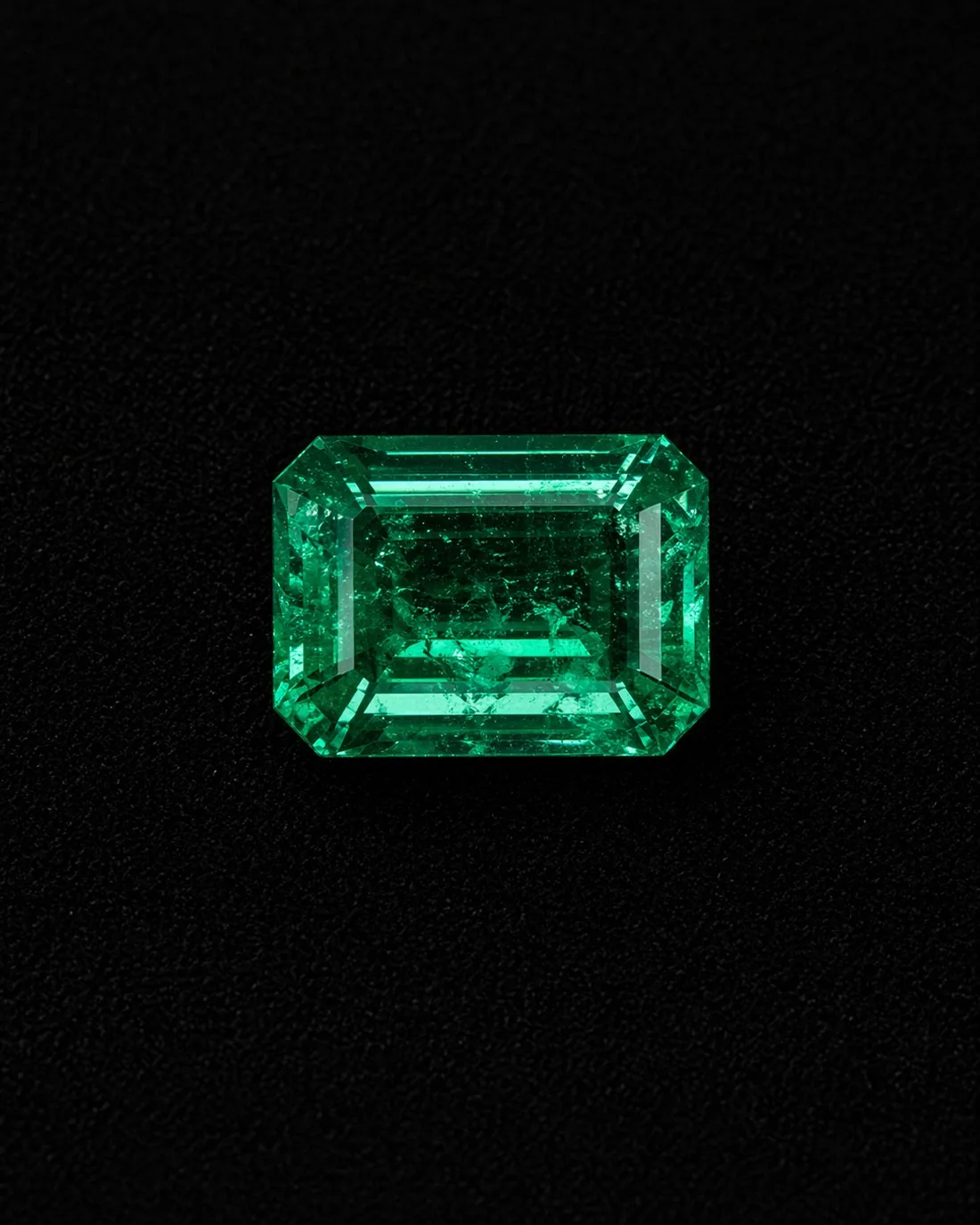
Colombia — Muzo and Chivor
Colombian emeralds form in black shale rather than hard rock — a rarity of geology that gives the purest greens the species has to offer.
Muzo runs warm — a saturated green with a breath of yellow. Chivor runs cool — green with a cast of blue. Between the two valleys sits the entire vocabulary of fine emerald colour.
Zambia — the cooler key
From the Kafubu belt comes the modern counterweight — home to the largest emerald mine on earth, in serious production only since the 1970s.
Iron deepens the Zambian green toward blue, and the crystals run cleaner than their Colombian cousins — a different beauty, not a lesser one.
Where Colombia is warmth, Zambia is depth. The brief decides which.
Origin, in writing
Every emerald the Maison offers is sourced at origin, vetted for provenance, and accompanied by its treatment status — stated plainly, in writing.
What the briefing cannot answer, an audience can.
Begin the Conversation